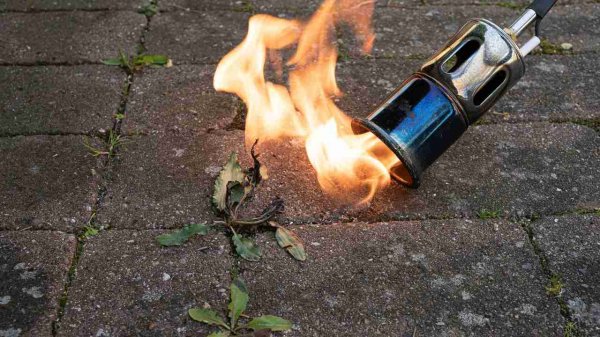
Gardeners seeking to avoid herbicides are increasingly turning to a method that sounds counterintuitive: using fire. Flame weeding, a technique long used by organic farmers, employs a handheld propane torch to sear young weeds with intense heat, causing their leaves to wilt and die without igniting them. The process is non-toxic and can be highly effective when done correctly, but it demands strict attention to safety and timing.
The science behind flame weeding is straightforward. Plant tissues are destroyed when exposed to temperatures above 160°F (71°C). The torch’s flame, which can reach thousands of degrees, does not need to burn the weed; a brief pass is enough to heat-kill the leaf cells. This method is best suited for small, green weeds in bare soil, making it an ideal complement to other organic practices like mulching, tarping, and drip irrigation.
How to Use a Flame Weeder Safely
Before lighting the torch, gardeners must choose the right equipment. For medium to large gardens, a standard torch kit with a 5-10 pound propane tank is recommended. Smaller gardens might opt for a handheld butane or MAP gas torch, which is easier to manage but requires bending over. A long-handled torch allows standing work, and some users modify a backpacking frame to carry the tank, freeing their hands.
Setting up the equipment on a non-flammable surface, such as concrete or bare dirt, is critical. Ensure the propane tank nozzle is off before attaching the hose, then double-check all connections. Turn the dial to open gas flow, but keep the torch unlit until you understand the controls. Most kits include a flint spark lighter, which is safer than a standard lighter because it produces only a tiny spark.
When ready to ignite, hold the torch away from your body and toward the ground. Open the tank dial fully, then slightly open the torch dial. Press the lever handle to release a small amount of gas, and flick the flint spark at the end of the torch. Adjust the flame size with the torch dial as needed.
Technique and Timing for Best Results
The most efficient way to kill weeds is to hold the flame two to six inches above the soil and use a sweeping motion. For very tiny weeds, the torch can be lowered to just an inch above the surface. A quick pass of five seconds or less is sufficient; there is no need to blacken the plant. Overheating can actually allow some perennials with strong taproots to recover, so restraint is key.
Flame weeding is most effective in bare beds before planting, targeting weeds at the “bean thread” stage—when seedlings are still tiny and pale. Broadleaf weeds up to six inches tall are also fair game. Some gardeners use this technique on newly seeded beds, running the torch lightly over the surface to eliminate early weed sprouts before the crop seeds germinate. This requires precise timing to avoid killing the desired seeds.
After treatment, weeds may take from an hour to a day to wilt and die. The foliage often turns dark green before browning. Once the weeds are gone, the soil should not be disturbed heavily, as turning the ground can bring dormant weed seeds to the surface. Instead, plant seedlings or sow seeds with minimal soil disruption, and consider laying drip irrigation or soaker hoses to water directly at the roots, followed by a layer of mulch to suppress future weeds.
Safety Precautions and Limitations
Flame weeding is not without risks. It should never be used near flammable materials such as dry plant debris, dry grasses, plastic, bark mulch, straw, or synthetic mulch. Avoid using it within 5-10 feet of these items, and keep the torch at least 12-24 inches away from desirable plants to prevent heat damage. The method is also unsuitable for areas prone to wildfires or during dry spells and burn bans. Even a small breeze can carry flames to dry grass, posing a serious fire hazard.
This technique only kills the above-ground parts of plants, so perennials and grasses may resprout from their roots. Repeated flaming or digging with a hori hori knife may be necessary. Alternatively, a tarp can be used to smother perennial weeds, exhausting their root energy, then the area can be flamed again after resprouting.
Flame weeding is a powerful, chemical-free tool for gardeners, but it requires respect for fire and a clear understanding of its limitations. When used correctly, it offers a quick and effective way to prepare beds and control weeds without introducing toxins into the environment.