Gardeners often face a silent invasion: weeds that perfectly mimic the look of grass, blending into lawns and borders until they've taken hold. These impostors range from the towering bamboo to the low-lying crabgrass, each with unique habits and removal challenges. Knowing what you're dealing with is the first step to reclaiming your green space.
Weeds are not a botanical category but a human designation—plants growing where they're not wanted. Some are native, while others are invasive exotics. Identifying them is crucial: you might decide to let native species flourish in a meadow-like setting, but act quickly to remove invasives before they spread.
Common Grassy Impostors and How to Tackle Them
Bamboo, though often planted deliberately, can become a weed when it escapes cultivation. Its young shoots look grass-like, but as it matures, the stems become woody and hollow. It spreads via rhizomes, making it tough to eradicate. Dig out the patch repeatedly until it's gone.
Yellow nutsedge (Cyperus esculentus) is a southern U.S. native that invades gardens aggressively. It looks like grass when young but develops upright stalks with a fan of blades at the tips, producing seeds in summer and fall. It spreads through rhizomes and underground bulbs. Don't just pull it—dig up the clumps and remove the rhizomes to prevent regrowth.
False brome (Brachypodium sylvaticum) is an invasive in the Pacific Northwest and parts of the East Coast. It thrives in shade and sun, colonizing forests and outcompeting native plants. It self-seeds readily, so remove it promptly. Dig out established patches, and if it's already seeding, mow it down to prevent spread, then dig in spring when the soil is moist.
Crabgrass (Digitaria spp.) is a notorious lawn weed that thrives in bare spots. It grows wide, crowding out other grasses, and spreads via finger-like appendages that root. In warm regions like Southern California and Florida, it can grow year-round. Remove patches by digging, and raise your mowing height to encourage healthy grass to outcompete it. Pull young seedlings before they mature.
Quackgrass (Elymus repens), also known as couch grass, is a shallow-rooted perennial that spreads aggressively via rhizomes. It's native to Europe and Asia but has become a troublesome weed across the U.S. It produces relatively few seeds, so repeated pulling over a year can eradicate it. Avoid composting the pulled weeds, as they can regrow—let them dry in the sun first.
Horsetail (Equisetum spp.) is an ancient plant that reproduces via spores, not seeds. Some types, like field horsetail, are dainty, while others, like scouring rush, are tall and imposing. Once established, it's nearly impossible to eradicate. Pull out as much as possible, cover the area with a tarp to block light, and repeat seasonally.
Annual bluegrass (Poa annua) is a nuisance weed that appears in fall and late winter, forming small tufts with white seed heads. It spreads aggressively but is easy to remove. Pull plants, mulch bare soil, or use cardboard to smother them. The key is to prevent seedlings from setting seed.
Pampas grass (Cortaderia selloana) is a tall, sharp-bladed ornamental that has become invasive in several states, including California, Oregon, and Washington. It can grow up to 12 feet tall and produces hundreds of seeds. Wear protective clothing when handling it. Small clumps can be dug up, but large ones may require significant effort and repeated digging over a year.
Common carpetgrass (Axonopus fissifolius) is a native U.S. grass that can be a lawn alternative in southeastern states. It tolerates mowing and foot traffic, but in California's coastal regions, it can become invasive. Pull young plants in spring or dig out large clumps.
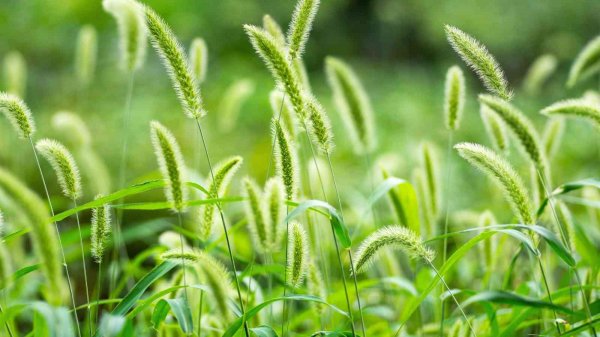
Foxtail (Setaria spp.) is a particular hazard for pet owners, as its seed heads have burrowing hooks that can embed in animals' noses and ears, sometimes requiring surgery. It's abundant in California and other states, colonizing bare soil. Chop down the plants in spring, cover with cardboard, and add soil on top to smother them.
Goosegrass (Eleusine indica) is easy to remove early in the season but becomes tough once established. Its flowering stems have a distinctive fan shape that spreads seeds. Dig out young plants in spring, and don't compost them—dispose of them in yard waste or bury them deep.
Early identification and consistent removal are your best defenses against these grassy invaders. Whether you're digging, mowing, or smothering, the key is to act before they set seed and spread further.