Gardeners seeking an environmentally friendly way to suppress invasive weeds are turning to native sedges, a diverse group of grass-like plants in the genus Carex that naturally outcompete unwanted vegetation. With species adapted to nearly every U.S. region, these perennials offer a sustainable alternative to chemical herbicides and high-maintenance lawns.
Unlike many ornamental grasses, native sedges require minimal intervention once established. They tolerate a wide range of soil moisture, from soggy rain gardens to dry, sandy sites, and many thrive in partial to full shade where conventional turf struggles. Their dense root systems and clumping growth habits physically crowd out weeds, reducing the need for constant weeding.
A Sedge for Every Site
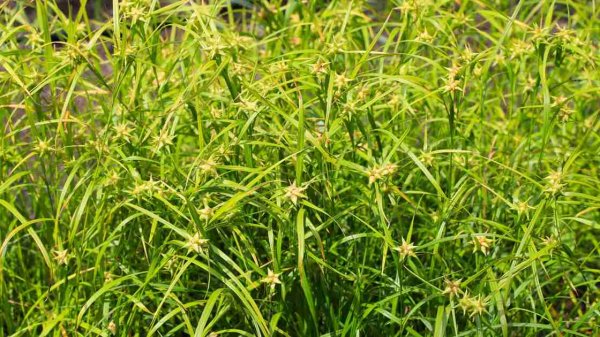
The genus Carex includes hundreds of North American natives, each adapted to specific conditions. For damp, shaded areas where grass fails, blue sedge (Carex glaucescens) and Gray's sedge (Carex grayi) are reliable choices. Blue sedge, hardy in zones 7-9, flourishes in seasonal flooding and is ideal for swales and pond edges. Gray's sedge, growing 2-3 feet tall, features ornamental spiky seed heads and is effective against creeping weeds like pennyroyal and crabgrass.
For drier, sunnier spots, sand sedge (Carex perdentata), native to Texas and Nebraska, and Texas sedge (Carex texensis) are drought-tolerant options. Texas sedge, with needle-like leaves, tolerates light foot traffic and needs mowing only once or twice a year at three inches or higher. Both species support local wildlife—amphibians hide in the foliage, while birds and small mammals feed on the seeds.
Woodland gardeners can choose from several shade-loving species. Blue wood sedge (Carex flaccosperma) and eastern woodland sedge (Carex blanda) both excel in partial to full shade, with the latter tolerating a broad range of moisture and soil types. Plantain-leaf sedge (Carex plantaginea) stands out with wide, ribbed foliage and early blooms, making it a striking substitute for Japanese forest grass.
Lawn Replacement and Beyond
Several sedges serve as practical lawn alternatives, reducing the need for mowing and watering. Pennsylvania sedge (Carex pensylvanica), hardy in zones 3-8, stays low and spreads via underground runners, though it does not tolerate heavy foot traffic. Leavenworth's sedge (Carex leavenworthii) also replaces turf effectively, maintaining a compact height without regular cutting. For a more naturalistic look, cedar sedge (Carex planostachys) and creeping sedge (Carex laxiculmis) form lush, spreading mats ideal for edging beds or filling gaps between perennials.
In the Pacific Northwest, slough sedge (Carex obnupta) thrives in both dry and wet sites, forming dense evergreen clumps along rivers and meadows. Palm sedge (Carex muskingumensis) prefers consistently moist soil and is a top choice for rain gardens, while rosy sedge (Carex rosea) brightens dense shade with rose-tinted seeds.
Establishing Native Sedges
Most native sedges require care only during their first year, needing regular water until roots establish. After that, they are largely self-sufficient, though some species benefit from an annual mowing or trimming to remove dead foliage. For those replacing a lawn, planting en masse is recommended, as dense groupings maximize weed suppression and visual impact.
As interest in sustainable landscaping grows, native sedges offer a practical, wildlife-friendly solution that reduces chemical use and conserves water. Their adaptability and low maintenance make them a valuable addition to any garden, from formal borders to wild meadows.