Homeowners who take pride in their lawns may suddenly notice circular patches of discolored or dead grass, often signaling a fungal infection. These diseases can strike without warning, thriving under specific weather conditions and lawn care practices. Understanding the signs and knowing how to respond can help protect the health and appearance of a home lawn.
Fungal turf diseases are common across many grass types, and their occurrence often depends on temperature, humidity, and soil conditions. While some are merely cosmetic, others can cause significant damage if left unchecked. Here is a look at nine prevalent turfgrass diseases, how to spot them, and what steps can be taken to manage them.
Brown Patch and Dollar Spot
Brown patch, a fungal disease that thrives in high heat and humidity, often appears when temperatures exceed 80 degrees Fahrenheit. It feeds on decaying plant material like thatch, and it particularly affects ryegrass and tall fescue, though zoysia grass can also be vulnerable. Infected blades may look wet before drying out and turning dark brown, forming large round patches up to three feet in diameter, sometimes with a darker ring at the edge.
Prevention focuses on reducing moisture and organic debris. Cutting back on irrigation, dethatching, aerating in spring, and collecting grass clippings can help. For those who have dealt with brown patch before, a preventative fungicide application may be useful. Treatment typically involves a broad-spectrum fungicide, available at hardware stores, though a professional lawn care service may be needed for larger outbreaks.
Dollar spot, while similar in appearance, creates much smaller patches, roughly the size of a silver dollar. These spots can merge if untreated. It is most active on warm spring or fall days with high humidity and cool nights. Infected blades show tan markings with red bands, and white fuzzy mycelia may be visible in morning dew. Prevention includes aerating and dethatching for airflow, watering in the morning to allow evaporation, and using systemic or granular fungicides like BioAdvanced Fungal Control for treatment.
Fairy Ring, Leaf Spot, and Melting Out
Fairy ring is a soil-borne fungus that breaks down organic matter and releases nitrogen, which can actually feed the grass. It appears as irregular or circular rings of deeper green, taller grass, sometimes with mushrooms. While it rarely causes significant damage, rings may die out under drought or heat. There are no chemical treatments recommended; regular mowing, aeration, and fertilization are the best defenses.
Leaf spot diseases are active in warm temperatures but can survive cooler weather. They typically affect leaf blades, though severe cases may reach the crown and roots. Symptoms include deep red or purple spots that turn tan or straw-colored as they age. Prevention involves yearly aeration and dethatching, and maintaining a consistent watering schedule to avoid long dry periods followed by heavy watering, which can intensify the disease. During an infestation, it is advised to hold off on fertilizing to limit growth.
Melting out, a cool-weather disease closely resembling leaf spot, especially targets Kentucky bluegrass. It appears in spring and fall, with spotted blades that may look black or straw-colored depending on nitrogen levels. Raising mowing height during cooler months and regular fertilization, especially in spring, can help prevent it. Fungicides like iprodione or chlorothalonil are effective treatments.
Powdery Mildew, Red Thread, and Snow Mold
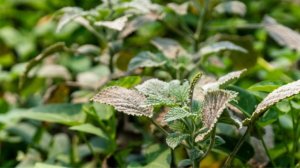
Powdery mildew, common on ornamental plants, also affects turfgrass, particularly Kentucky bluegrass. It appears as white or grey dust on blades, most often in shady areas, and can be seen from April to October. The turfgrass strain can be more damaging than the ornamental variety. Prevention includes planting shade-tolerant grasses like perennial ryegrass, pruning trees for better airflow, and aerating. Treatment is tricky because the fungus can quickly resist fungicides, so prevention is key.
Red thread forms circular red or tan patches up to five inches in diameter, affecting cool-season grasses like perennial ryegrass and fine fescue, especially in high humidity. Pink or red threads appear on blades, looking shiny when wet and brown when dry. It often indicates a nitrogen deficiency, so regular fertilization and adequate watering are preventive. The disease is usually not severe and may not require chemical treatment, but a generic lawn fungicide can be used if needed.
Snow mold appears in spring as snow melts, caused by warm soil under snow or leaf litter. Grey snow mold affects leaf blades, forming patches up to 24 inches, while pink snow mold can damage the crown, with smaller patches up to 10 inches. Prevention involves keeping grass free of snow and wet litter, and applying fungicide before snowfall if desired. Treatment includes fungicides like propiconazole.
Summer Patch
Summer patch is a root disease most destructive in warm months, affecting fine fescue and Kentucky bluegrass. Symptoms appear as straw-colored patches up to three feet in diameter, often grouping together. Prevention focuses on aeration to improve root health, keeping grass at about three inches to encourage deeper roots, and watering lightly in the afternoon. Treatment may require systemic fungicides, some of which need professional application.
Ultimately, many turf diseases can be managed with consistent lawn care practices such as aeration, dethatching, proper mowing, and fertilization. Choosing grass seed suited to local conditions—whether for shade, drought, or disease resistance—can also reduce the risk of fungal outbreaks.