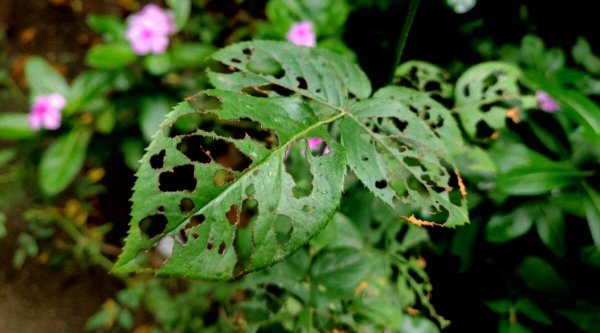
Roses with tattered, hole-riddled leaves are a familiar frustration for gardeners, but the damage is not always a sign of a dying plant. In many cases, the culprits are insects that can be managed with simple, targeted actions—or sometimes left alone entirely. Knowing which creature is responsible is the first step to deciding whether intervention is needed.
While glossy magazine spreads depict flawless rose bushes, real gardens are shared spaces. A certain level of insect activity is natural and even beneficial. The key is distinguishing between harmless visitors and pests that can seriously weaken a plant.
Common Culprits and Their Signatures
Several insects leave distinctive marks on rose foliage. The rose chafer beetle (Macrodactylus subspinosis), a fuzzy tan beetle about half an inch long, is common in Eastern North America, especially in sandy soils. These beetles emerge in swarms in early spring and feed on leaves, buds, and flowers, often skeletonizing foliage. They are also toxic to pets and birds if ingested. For small infestations, hand-picking and dropping them into soapy water is effective. A cheesecloth barrier erected before their May or June emergence can prevent larger problems.
Sawfly larvae, often called rose slugs, look like small green caterpillars but are the young of a non-stinging wasp. They appear in early spring and chew irregular holes, leaving behind tan, translucent "windowpanes" on leaves. Unlike butterfly or moth caterpillars, which should be relocated rather than destroyed, sawfly larvae can be removed manually. Encouraging natural predators like birds, lacewings, and ladybugs through diverse plantings is a sustainable control method. Insecticides are rarely necessary and can harm these beneficial insects.
Not all hole-makers are pests. Leafcutter bees, native to the Western United States, cut neat, semicircular notches from leaf edges. These bees do not eat the foliage; they use the pieces to line their nests. They are valuable pollinators and cause no lasting damage. Gardeners are encouraged to appreciate their handiwork rather than fight it.
When the Damage Is More Serious
Japanese beetles, an invasive species now widespread in the Eastern U.S., are among the most destructive. They feed during the day, skeletonizing leaves and damaging buds and blooms. Their metallic green bodies and copper heads make them easy to spot. Milky spore, a bacterial control, can be applied to soil to kill grubs, while hand-picking adults in the morning when they are sluggish is a practical approach. Companion plants like alliums, geraniums, and catnip may repel them.
Fuller rose beetles, or weevils, chew ragged notches on leaf edges, distinguishing them from the smooth cuts of leafcutter bees. These grayish-tan beetles are active at night and can be managed by wrapping sticky tape around the base of the rose, as they cannot fly. Encouraging predators like parasitic wasps and ladybugs also helps keep their numbers in check.
Slugs and snails, more commonly associated with vegetable gardens, may also attack roses, leaving ragged holes and slimy trails on lower leaves. Hand-picking at night, removing debris, and using copper barriers or beer traps are effective, non-chemical solutions.
Weather Can Be a Culprit Too
Not all leaf damage is insect-related. Hailstorms, particularly in spring, can tear holes in leaves and break stems. Protecting roses with tarps or boards during severe weather can prevent damage. Mounding soil at the base of canes helps strengthen them against wind and hail.
In most cases, holes in rose leaves are not a cause for alarm. Identifying the cause allows gardeners to respond appropriately, favoring natural predators and avoiding broad-spectrum insecticides, which can harm beneficial insects and lead to resistant pests. Healthy, well-cared-for roses are more resilient and better able to recover from minor damage.