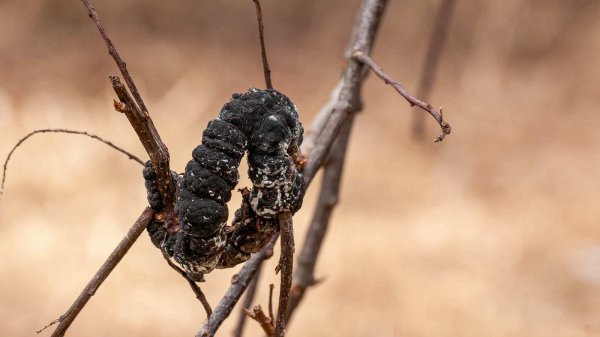
Black knot, a fungal disease caused by Apiosporina morbosa, is wreaking havoc on stone fruit trees across North America, leading to substantial economic losses for growers and threatening the timber industry. The disease, which affects trees in the Prunus genus, manifests as large, black galls that encircle branches, causing dieback and creating entry points for secondary infections. While native to the continent, its impact has been felt from Canada to Mexico, with a single reported case in Taiwan in the 1970s, making it a quarantine pest internationally.
The disease is notoriously difficult to eradicate once established, making proactive monitoring and pruning essential for managing plum and cherry orchards. The fungus overwinters on the surface of infected branches, releasing spores in early spring when conditions are wet and mild. These spores, carried by wind and rain, infect young green shoots and wounded branches, leading to the formation of galls that can take months or even years to become visible.
Recognizing the Signs of Infection
Early symptoms of black knot are subtle, with slight swelling on branches that may go unnoticed. As the infection progresses, these swellings develop a velvety olive-green covering before turning into hard, black knots that can grow from under an inch to over a foot in length. These galls often become most apparent after leaves drop in the fall, revealing the extent of the damage. The fungus not only disrupts the tree's vascular system but also stimulates the production of extra cells, further distorting normal growth.
Black knot affects a wide range of Prunus species, including prized timber trees like black cherry (Prunus serotina) and popular orchard varieties such as American plum, European Stanley plum, Japanese plum, sweet cherry, and Mahaleb cherry. The damage to black cherry is particularly concerning for the timber industry, as the wood rot and galls significantly reduce the market value of this hardwood.
Control and Prevention Strategies
There is no cure for black knot once a tree is infected; the only effective control is the physical removal of diseased branches. Pruning should be done in winter when trees are dormant and galls are more visible. Cuts should be made four to six inches below the gall on twigs, and at least one inch into healthy tissue on larger branches. Sterilizing pruning tools with a solution of at least 70% rubbing alcohol is critical to prevent spreading the disease. All infected clippings should be burned to eliminate the fungus, as it can remain dormant on debris.
Preventative measures include applying copper fungicides from late fall to late winter, with treatments timed around Thanksgiving, Christmas, and Valentine's Day. A lime sulfur spray can also be used during dormancy, but should not be applied after flowers bloom or before rain. Choosing less susceptible species, such as sour cherry or Nanking cherry, and removing wild plum or cherry trees that can harbor the fungus, are additional strategies to reduce the risk of infection.
While black knot does not directly affect the fruit, it can reduce the overall vigor of the tree, impacting fruit production and quality. For severely infected trees, removal may be the only option to prevent the spread of spores to healthy neighbors. This can be a multi-season effort, as any visible gall indicates an infection that is at least a year old.